Nutritional value
Dairy is a source of essential nutrients and plays an important role in a healthy diet. With this in mind, Royal A-ware calls for increased awareness of the nutritional value of dairy in relation to its impact on the environment. The standard ESRS structure has not been followed in this chapter. Royal A-ware is committed to contributing to our customers’ health by providing high-quality, nutritious dairy products. This pillar involves the material topics Nutritional value in relation to footprint and Food safety.
Impacts, risks and opportunities
As part of our DMA, we identified one material impact and one risk.
Impact
Actual positive impact on human health and the environment by offering dairy products with a relatively lower environmental footprint compared to plant-based proteins.
Risk
Risk of declining demand for dairy products due to shifting consumer sustainability preferences (balance between plant-based and animal protein) and/or the lack of factual or scientific evidence supporting the nutritional value of dairy products in relation to their environmental impact.
Our approach
Royal A-ware strives for products with the highest possible nutritional value and the lowest possible impact on people, animals and the environment. We believe this dual focus on nutrition and sustainability is particularly important when discussing the protein transition, a familiar concept in the climate change debate.
Our perspective on the protein transition
The protein transition involves the transition from animal-based protein to plant-based and other proteins sources to mitigate climate change. The environmental impact of dairy production is often linked to milk and cows, with the belief that less milk would be better for people, animals and the environment. We believe the nutritional value of dairy products, such an important consideration in our opinion, is not sufficiently taken into account when determining the environmental impact. Due to this, we developed a vision that connects environmental impact with the nutritional value of dairy products.
Factoring nutrition into the environmental debate
Animal products provide a high amount of protein, fatty acids and various vitamins and minerals that contribute to a healthy diet. Dairy, in particular, is a major source of protein, calcium, zinc and vitamins B2, B12 and D. Dairy products are associated with higher greenhouse gas emissions per kilogram than plant-based alternatives. However, from a nutritional perspective, they are often not comparable. If the alternative provides fewer essential nutrients or is less digestible, a simple kilogram‑to‑kilogram comparison offers an incomplete picture of its environmental impact (Peters et al., 2021).
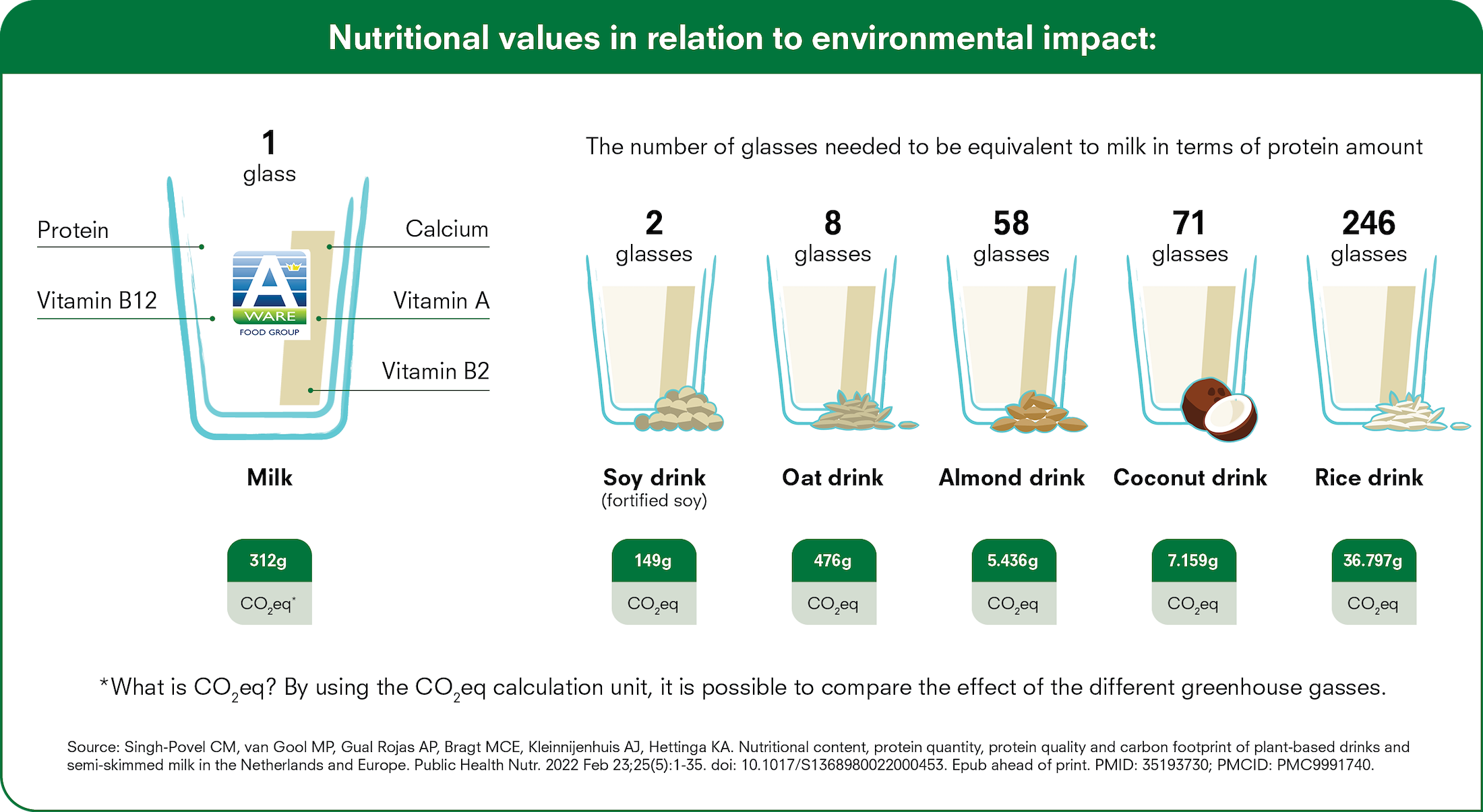
Royal A-ware believes that expressing environmental impact per kilogram of product, without taking into account nutritional value, can mislead consumers in their efforts to choose healthy and sustainable food. Therefore, this information must be incorporated into the labelling of all food products as soon as possible, enabling consumers to make a more informed decision.
We share the United Nation's Food and Agriculture Organisation's recognition of dairy as an important source of nutrition – particularly for nutrients such as protein, calcium and vitamins that plant-based substitutes may not fully provide. Additionally, the overall environmental impact may remain largely unchanged, as greater quantities of vegetable products are required to achieve equivalent levels of vitamins and minerals. For these reasons, we consider it essential that dairy maintains a special position within all dietary guidelines.
Objectives and actions
In line with our aim to raise awareness of the nutritional value and health benefits of dairy, as well as its environmental impact in relation to the protein transition, we have prepared an internal campaign for employees in 2025. The goal of this campaign is to enhance knowledge about the nutritional and health benefits while strengthening our organisational pride in dairy.
The campaign will launch posters and quizzes in early 2026 for all colleagues of Royal A-ware at all dairy locations. We will determine the next steps of the campaign based on the results and feedback.
Next to this campaign we have brought this topic to the attention of our clients and other stakeholders. They appreciated us sharing these valuable insights with them.
Targets and achievements
Currently, Royal A-ware does not have any targets set for this topic.